


Unlock New Revenue Streams Through Grid Services from Battery Storage System
For visionary business leaders, cutting operational costs—especially reducing high electricity expenses—has always been a constant goal. Installing a battery storage system is a classic and effective approach. By charging when electricity prices are low and discharging when prices peak (a strategy often called peak-valley arbitrage), businesses can significantly reduce their electricity bills.
However, a more forward-thinking mindset is emerging: why stop at simply saving money, when your energy storage system could actually make money?
Transforming your battery energy storage system from a passive “cost-saving tool” into an active “profit center” marks a fundamental shift in corporate energy strategy. The key to this transformation lies in actively participating in grid services from battery storage, where your system contributes directly to stabilizing and supporting the power grid—while earning revenue in return.
From Defense to Offense: A Shift in Energy Strategy System
Leading enterprises no longer settle for defensive cost control. They aim to create new income streams from existing assets, boost return on investment, and strengthen their reputation as responsible and innovative grid participants. Simple energy arbitrage alone can no longer satisfy their pursuit of maximum asset utilization and financial performance.
Forward-looking companies are moving beyond cost-saving toward active revenue generation through participation in Virtual Power Plant (VPP) for business platforms and other grid-related markets.

Turning Your Energy Storage System into a Gold Mine: Three Profitable Models
By engaging in the following grid service programs, your commercial battery energy storage system can unlock multiple revenue opportunities.
1. Demand Response Programs
What it is:
When the power grid faces extreme pressure—such as during heatwaves when air conditioning demand spikes—grid operators pay businesses to temporarily reduce their electricity consumption. Instead of drawing power from the grid, your storage system can discharge energy to power your facility. In essence, you are returning energy to the grid when it needs it most.
Business value:
You get paid for “using less electricity.” The stored energy in your batteries is effectively sold back to the grid at premium rates. Participating in demand response programs not only provides extra revenue but also enhances your company’s image as a responsible grid participant contributing to system stability.
2. Frequency Regulation Market
What it is:
The stability of the grid depends on maintaining a constant frequency (typically 50Hz or 60Hz). Any imbalance between electricity generation and consumption causes frequency fluctuations. To correct this in real time, grid operators rely on resources that can quickly charge or discharge to balance supply and demand.
Business value:
Battery storage is ideally suited for this purpose. It can respond within milliseconds to grid signals, providing precise and rapid balancing power. Participation in the frequency regulation market is compensated based on performance, and the payments can be significant. For many energy storage owners, this has become a steady and highly profitable revenue stream, often providing passive income throughout the year.
3. Capacity Market
What it is:
To ensure that there will be enough generation capacity to meet future peak demand, grid operators contract reliable energy resources in advance. By committing your storage system as a dependable capacity provider, you can participate in this market and receive guaranteed annual payments.
Business value:
This income stream is predictable and stable—it’s like earning rental income from your system’s capacity to provide reliable power when needed. Participating in the capacity market strengthens the financial certainty and long-term profitability of your energy project.
How to Participate: The Role of the Virtual Power Plant (VPP)
A single enterprise’s storage capacity may be limited, but when aggregated through a Virtual Power Plant (VPP) for business, hundreds or even thousands of distributed energy resources—such as battery systems and solar installations—can work together as one coordinated power unit.
The VPP operator manages interactions with the grid, handles bidding processes, and takes care of the technical complexities of dispatch. As a business owner, you simply authorize the use of your battery storage system through the platform. The VPP then shares a portion of the revenue with you. It’s a low-effort, asset-light model that enables you to earn steady returns while supporting grid stability.
Case Study: A Profitable Energy Storage System Practice in the UK
Background:
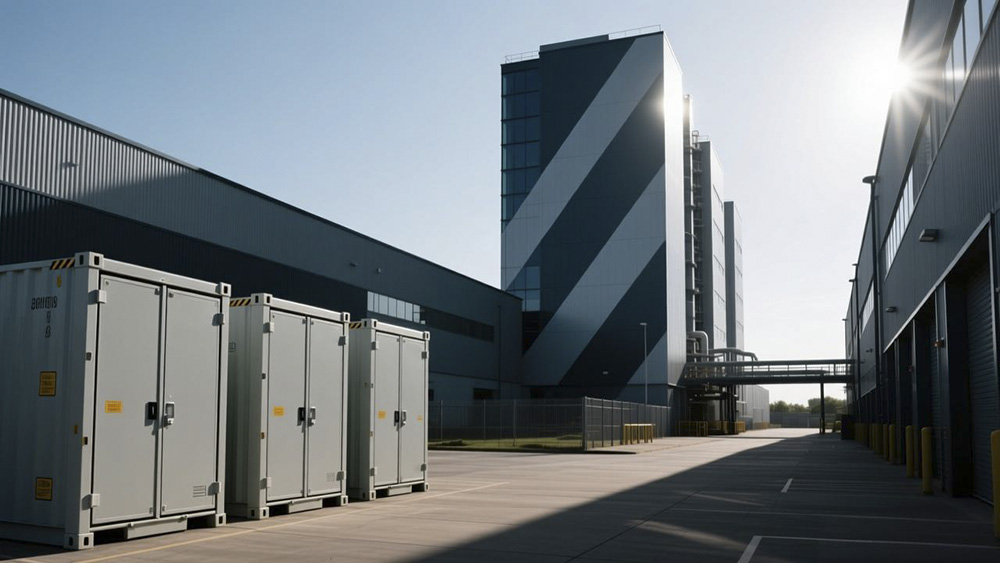
A large manufacturing park in the UK installed a 4MWh battery storage system with the initial goal of reducing energy bills through peak-valley arbitrage.
Strategy upgrade:
Later, the park partnered with a leading Virtual Power Plant (VPP) for business operator to integrate its system into a national VPP network, enabling participation in multiple grid service markets.
Revenue sources:
- Base savings: Continued the original arbitrage strategy, saving around £80,000 annually on electricity costs.
- Frequency regulation income: The system remained in standby mode over 90% of the time, ready to respond to national grid signals. This service generated an additional £150,000 per year.
- Demand response income: During winter peak hours, the facility joined short-term reserve programs and earned roughly £50,000 annually.
- Capacity market revenue: The system also won a one-year capacity contract, providing £60,000 in stable income each year.
Total results:
Through VPP integration, the park’s storage system evolved from a simple cost-saving tool into a profit-generating asset, earning over £260,000 annually. As a result, the project’s payback period shortened dramatically—from the expected seven years to less than four.
The Future of Commercial Energy Storage
This transformation represents the next frontier of smart energy management. As grid digitization and renewable integration continue to advance, the opportunities for grid services from battery storage will only expand.
Forward-thinking companies that act early will gain both financial and strategic advantages—earning recurring revenue, reducing carbon footprints, and positioning themselves as leaders in the transition to a smarter, more resilient energy future.
How to Choose the Right Commercial and Industrial Energy Storage System Integrator
What is Battery State of Health (SOH) in Energy Storage System
For more questions, please
contact us

+86 15079804024


Room 102, Building one, No.147, Qingfeng Road, Qingxi Town, Dongguan, China