


Hybrid Energy Storage Systems The Intelligent Fusion Powering Modern Energy Grids
Confronting renewable energy's intermittency requires more than single-technology solutions—it demands strategic integration. A hybrid energy storage system (HESS) merges complementary storage technologies like lithium-ion batteries, supercapacitors, or flow batteries within a unified architecture, intelligently leveraging each technology's strengths. These systems dynamically allocate tasks: lithium-ion handles sustained base-load supply, supercapacitors manage millisecond-response peak demands, and flow batteries provide long-duration backup. This technological synergy transforms volatile renewable inputs into grid-stable power while extending equipment lifespans by 30-40% compared to single-source systems.
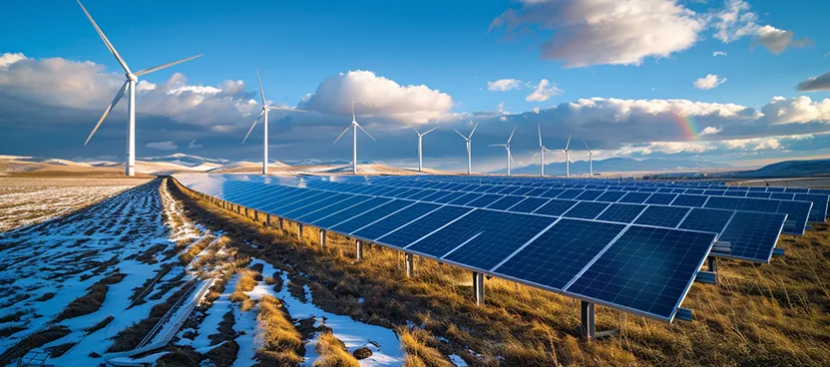
Core Architecture: Where Technologies Converge
A cutting-edge hybrid energy storage system integrates three critical layers:
Multi-Chemistry Storage Matrix
LiFePO₄ batteries (for high-density 4-8hr storage) pair with supercapacitors (instant 500kW+ power bursts) and alternative technologies like vanadium flow batteries (12hr+ duration). Seplos systems utilize AI-driven controllers to assign tasks based on real-time demands—supercapacitors absorb solar spikes during cloud transitions, while LiFePO₄ modules sustain overnight loads.
Adaptive Power Conversion Hub
Advanced bidirectional inverters synchronize AC/DC conversion across heterogeneous storage units. Unlike standard systems, HESS employs multi-port inverters that independently manage charge/discharge pathways for each technology, minimizing cross-conversion losses to <2%.
Predictive Energy Orchestration
Machine learning algorithms analyze weather patterns, usage histories, and grid signals to pre-allocate energy reserves. Seplos' NeuroGrid OS forecasts solar/wind fluctuations 48 hours ahead, pre-charging supercapacitors before ramps and preserving LiFePO₄ cycles for critical periods.
Why Hybrid Systems Outperform Single-Tech Solutions
The operational supremacy of hybrid energy storage systems manifests through four transformative advantages:
Lifespan Amplification
By diverting high-stress rapid-cycling tasks to supercapacitors (1M+ cycle tolerance), HESS reduces LiFePO₄ degradation by 60%. Seplos deployments demonstrate 12-year functional longevity versus 7-8 years for standard systems.
Cost-Performance Optimization
Hybrid configurations lower capex by 25% through right-sized technology allocation. Supercapacitors handle 80% of short-burst duties at 1/3 the cost of equivalent battery capacity, while flow batteries provide long backup at $50/kWh versus $200/kWh for lithium expansion.
Blackout Resilience
During grid failures, supercapacitors instantaneously stabilize voltage (within 2ms) while batteries ignite critical loads. Seplos HESS maintains hospital MRI systems through 15-second generator transitions—impossible with single-tech solutions.
Renewable Maximization
Machine learning-driven "energy routing" increases solar self-consumption to 98% by perfectly aligning storage responses to generation profiles. Field data shows HESS captures 22% more solar than battery-only systems during partly cloudy conditions.
Real-World Deployment: From Microgrids to Megacities
Consider California's 2024 coastal microgrid project:
Challenge: 80% solar dependency with frequent marine layer disruptions
Seplos HESS Solution:
2MW supercapacitor bank for 90-second cloud transitions
4MWh LiFePO₄ for evening load shifting
12MWh flow battery for multi-day storm reserves
Result: 99.98% uptime with 37% lower storage capex versus lithium-only alternatives
Conclusion: The Future-Proof Energy Fusion
Hybrid energy storage systems represent the pinnacle of intelligent energy architecture—transforming storage from passive reservoirs to active grid collaborators. By fusing technologies under AI governance, HESS delivers unprecedented reliability, cost efficiency, and renewable synergy. Since 2017, Seplos has pioneered this convergence through vertically integrated R&D, developing turnkey HESS solutions for 50,000+ global deployments. Our upcoming Solid-State Hybrid series—combining lithium-metal anodes with graphene supercapacitors—exemplifies the relentless innovation driving this sector. As a certified top energy storage battery manufacturer with IEC 62619/UL 9540 compliance, Seplos continues advancing OEM & ODM services for residential and commercial applications, empowering customers to optimize energy usage through intelligent management. With expanded production capacity and next-gen battery technologies launching in 2026, Seplos remains committed to leading the global transition toward sustainable, resilient energy ecosystems.
Is It Worth Getting Battery Storage with Solar Panels
Defining Excellence What Makes an ESS Energy Storage System the "Best"?
For more questions, please
contact us

+86 15079804024


Room 102, Building one, No.147, Qingfeng Road, Qingxi Town, Dongguan, China