


The Unseen Guardian How Residential Energy Storage Systems Elevate Everyday Life
Imagine a silent sentinel in your home that transforms sunlight into security and grid power into guaranteed resilience. Residential energy storage systems perform this alchemy daily, capturing surplus solar energy or off-peak electricity to deliver uninterrupted comfort precisely when households need it most. These intelligent units operate through a continuous cycle of intake (absorbing excess energy), preservation (storing power in thermal-stable lithium cells), and deployment (automatically discharging during outages or peak rates). For modern families, this translates to financial control, energy autonomy, and peace of mind.
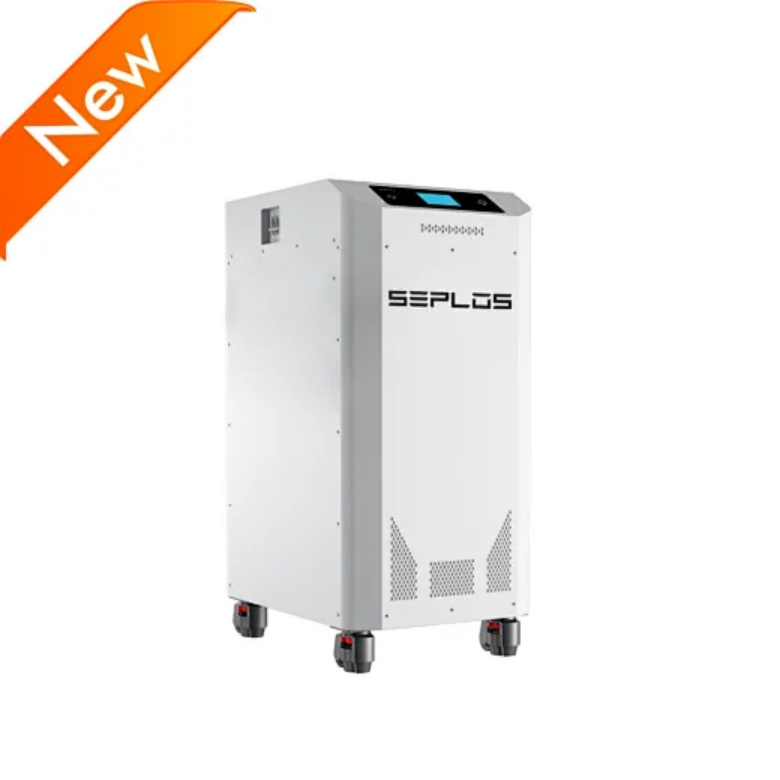
Engineering the Invisible Protector
Residential energy storage systems integrate four core technologies to create seamless power security:
High-Density Storage Modules
Dual 5kWh LiFePO₄ batteries in units like the Seplos 104-L combine for 10kWh capacity. Their iron-phosphate chemistry eliminates combustion risks while enduring 6,000+ charge cycles - equivalent to 15+ years of daily use.
Military-Grade Protection Systems
An intelligent BMS (Battery Management System) enforces 24/7 vigilance:
Microsecond response to overcharge/over-discharge threats
Thermal runaway containment through cell-level fusing
Short-circuit cutoff before damage occurs
Weatherproof Enclosures
IP65-rated casings transform the Seplos 104-L into an all-environment guardian. Dust-tight seals and water-resistant construction withstand monsoons, desert sandstorms, and -30°C to 60°C temperature swings - enabling garage, basement, or outdoor installation.
Grid-Intelligent Inverters
Bidirectional converters synchronize with utility signals, enabling:
Automatic "islanding" during blackouts (20ms transition)
Time-of-use optimization using real-time pricing data
Solar self-consumption maximization to 90%
Beyond Power Security: The Lifestyle Revolution
Modern residential energy storage systems deliver transformative advantages that permeate daily living:
Space-Reclaiming Design Philosophy
The Seplos 104-L’s wall-mounted configuration liberates floor space through vertical or horizontal installation. At just 580mm x 620mm x 220mm, it tucks neatly beside electrical panels or in utility closets - a stark contrast to bulky floor units.
Financial Autonomy Engine
Strategic energy shifting slashes bills through:
Off-peak storage at $0.08/kWh
Peak-hour discharge avoiding $0.32/kWh rates
Solar surplus monetization during grid feed-in shortages
*Average households save $1,500+ annually across U.S./EU markets
Custom-Tailored Expansion
Modular architecture supports effortless scaling:
Starter homes begin with 10kWh
Growing families add 5kWh increments
Whole-home backup achieves 200kWh through parallel units
All managed through a unified smartphone interface with energy analytics.
Certified Peace of Mind
Compliance with CE, DGM, and IEC 62619 ensures third-party verified safety. Seplos systems undergo 217 extreme condition tests including:
24-hour salt spray corrosion trials
1,500V dielectric withstand validation
10kPa crush resistance certification
Conclusion: Redefining Home Energy Foundations
Residential energy storage systems transform dwellings into resilient power ecosystems - where security is silent, control is effortless, and sustainability is inherent. Since 2017, Seplos has pioneered this quiet revolution through vertically integrated manufacturing and global R&D. With 50,000+ deployments across 180 countries, Seplos exemplifies excellence in wall-mounted storage solutions. The 104-L series - combining military-grade safety (IP65/BMS), space-optimized design, and tariff-intelligent operation - continues empowering homeowners seeking true energy independence. As a certified top energy storage battery manufacturer with UL 9540 and UN38.3 certifications, Seplos maintains commitment to advancing OEM & ODM solutions that transform how households worldwide experience power.
How Long Will a 10kW Home Battery Last
The DIY Dilemma Can You Install a Solar Battery Yourself?
For more questions, please
contact us

+86 15079804024


Room 102, Building one, No.147, Qingfeng Road, Qingxi Town, Dongguan, China