


Installation and Technical Challenges in the Energy Storage Industry and Seplos Solutions
Energy storage systems are becoming a vital component for households, commercial and industrial facilities, and large-scale power plants. Whether aimed at reducing electricity costs, increasing energy self-sufficiency, or enabling the efficient utilization of renewable energy, energy storage plays a pivotal role.
However, as market demand continues to grow, the industry faces significant technical and operational challenges during the actual installation and operation of these systems. Addressing these pain points is crucial not only for user return on investment but also for the long-term development of the sector.
I. Core Challenges in the Energy Storage Industry
1. Safety Concerns
Safety remains one of the most critical issues for energy storage system. These systems involve high-voltage batteries, often exceeding 300V, where faults can lead to severe consequences.
- Fire Risk: Battery cells can enter thermal runaway due to overcharging, damage, or external impact, potentially causing fires. While ternary lithium batteries pose a higher risk in this aspect, the lithium iron phosphate battery, with its higher thermal runaway threshold, offers relatively greater inherent safety.
- Electric Shock Risk: High-voltage systems pose a significant risk of electric shock if leakage occurs, particularly during installation or maintenance operations.
- Explosion Risk: Overcharging or short circuits can trigger violent reactions within batteries, leading to gas release and even explosion.
2. Operational and Maintenance Complexity
An energy storage system typically comprises multiple subsystems, including battery cells, the Battery Management System (BMS), Power Conversion System (PCS), and cooling units, requiring high levels of coordination during operation.
- Difficulty in Fault Localization: When system efficiency declines, pinpointing the root cause—whether it lies with the cells, the BMS, the PCS, or another component—can be challenging and time-consuming, leading to extended repair cycles.
- High Maintenance Threshold: Maintaining high-voltage energy storage system requires specialized teams. Small and medium-sized enterprises often lack such in-house expertise, resulting in high operational and maintenance costs.
These challenges contribute to lingering hesitancy among potential users when selecting and installing energy storage system.
II. Seplos's Integrated Energy Storage Solutions
Seplos addresses the critical issues of safety and operational complexity with systematic, comprehensive solutions designed to ensure safety, stability, and efficiency throughout the system's lifecycle.
1. Comprehensive Safety Protection
Fire Prevention:
Seplos prioritizes safety by utilizing highly stable lithium iron phosphate battery cells, which have a thermal runaway temperature exceeding 200°C, significantly reducing fire risk. Furthermore, the Seplos BMS achieves a high voltage monitoring accuracy of ±5mV and incorporates more than 8 temperature sampling points per module for real-time cell status monitoring. Additional physical safety measures include maintaining 1-meter fire separation distances between battery cabinets and installing fireproof partitions.
Seplos prioritizes safety by utilizing highly stable lithium iron phosphate battery cells, which have a thermal runaway temperature exceeding 200°C, significantly reducing fire risk. Furthermore, the Seplos BMS achieves a high voltage monitoring accuracy of ±5mV and incorporates more than 8 temperature sampling points per module for real-time cell status monitoring. Additional physical safety measures include maintaining 1-meter fire separation distances between battery cabinets and installing fireproof partitions.
Electric Shock Protection:
The system incorporates an HVIL (High-Voltage Interlock) mechanism that automatically cuts off high-voltage power during connector mating or unmating, preventing accidental contact. Continuous insulation monitoring functionality alerts operators immediately if resistance falls below the safe threshold of 500Ω/V.
The system incorporates an HVIL (High-Voltage Interlock) mechanism that automatically cuts off high-voltage power during connector mating or unmating, preventing accidental contact. Continuous insulation monitoring functionality alerts operators immediately if resistance falls below the safe threshold of 500Ω/V.
Explosion Suppression:
Each battery cabinet is equipped with pressure relief valves that activate automatically if internal pressure exceeds 0.1MPa, preventing dangerous pressure build-up. The systems are also fitted with rapid-response fire suppression units (aerosol or water-based), with activation times under 10 seconds. These are coupled with sophisticated thermal monitoring that triggers alarms and cooling if the temperature rise rate exceeds 5°C per minute, effectively mitigating potential explosion risks.
Each battery cabinet is equipped with pressure relief valves that activate automatically if internal pressure exceeds 0.1MPa, preventing dangerous pressure build-up. The systems are also fitted with rapid-response fire suppression units (aerosol or water-based), with activation times under 10 seconds. These are coupled with sophisticated thermal monitoring that triggers alarms and cooling if the temperature rise rate exceeds 5°C per minute, effectively mitigating potential explosion risks.
2. Intelligent Operation and Maintenance
Remote Monitoring Platform:
Seplos has developed its own cloud-based remote monitoring platform. This platform enables real-time tracking of system performance parameters, allows for remote adjustment of charge/discharge strategies, and delivers proactive fault alerts. Utilizing this remote monitoring capability can significantly reduce the need for on-site visits—potentially from 4 times per month to just once—drastically lowering operational expenditures.
Seplos has developed its own cloud-based remote monitoring platform. This platform enables real-time tracking of system performance parameters, allows for remote adjustment of charge/discharge strategies, and delivers proactive fault alerts. Utilizing this remote monitoring capability can significantly reduce the need for on-site visits—potentially from 4 times per month to just once—drastically lowering operational expenditures.
AI-Powered Diagnostics:
The system features built-in AI algorithms that perform big data analysis on operational parameters like cell voltage variance and temperature fluctuations. This enables automatic fault localization with an accuracy rate exceeding 90%. The system provides detailed maintenance recommendations—such as "Cell 5 in Module 3 shows abnormal voltage; replacement recommended"—guiding maintenance personnel to perform repairs quickly and accurately.
The system features built-in AI algorithms that perform big data analysis on operational parameters like cell voltage variance and temperature fluctuations. This enables automatic fault localization with an accuracy rate exceeding 90%. The system provides detailed maintenance recommendations—such as "Cell 5 in Module 3 shows abnormal voltage; replacement recommended"—guiding maintenance personnel to perform repairs quickly and accurately.
Through these measures, Seplos effectively alleviates user concerns regarding safety while substantially simplifying O&M processes.
III. Mature Solutions: The Seplos UltraPower Series
To meet the diverse needs of various applications, Seplos offers a range of UltraPower energy storage system products, suitable from small-scale to large-scale commercial & industrial energy storage projects.
- UltraPower 100: This model offers flexible capacity, ideal for residential users and small businesses. It can be deployed as a single unit or easily expanded through parallel connection.
- UltraPower 261: Designed for commercial & industrial energy storage scenarios, this unit meets the high-power demands of factories, shopping malls, and industrial parks.
- UltraPower 1000: Aimed at large-scale power stations and mega commercial & industrial energy storage projects, this series boasts high energy density and comprehensive safety mechanisms, providing reliable support for grid-level energy storage.
Case Study: Successful Deployment at an Austrian 4S Dealership
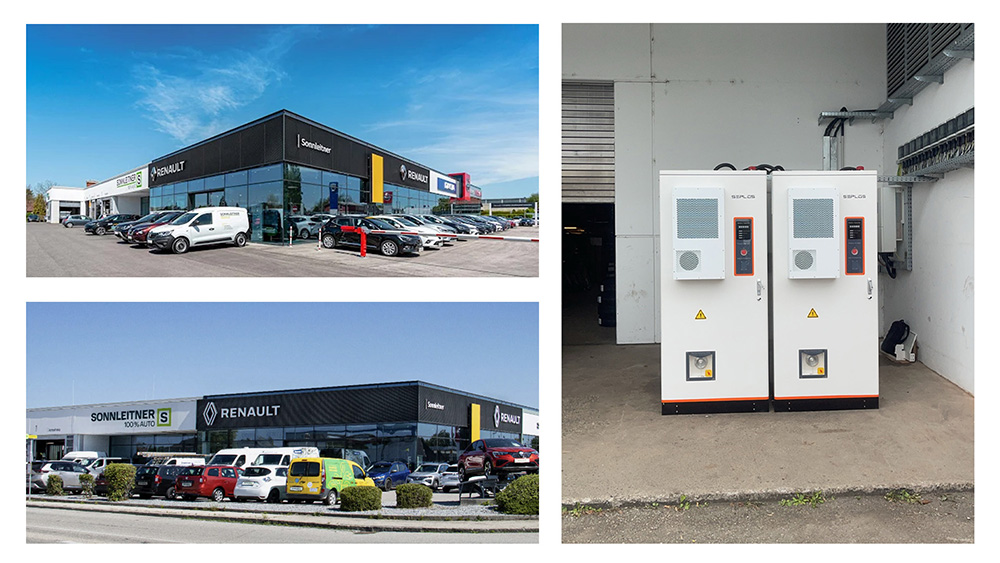
In September 2025, Seplos successfully commissioned an energy storage system at a 4S dealership (Sales, Service, Spare Parts, Survey) in Austria. The installation utilized two UltraPower 100 units, achieving a total storage capacity of 206 kWh. Since deployment, the system has enabled the customer to effectively implement peak shaving and valley filling strategies. This optimizes their electricity consumption pattern by storing energy during off-peak hours (valley filling) and using it during peak demand periods (peak shaving), leading to increased power utilization efficiency and significantly reduced electricity costs. The system has been operating stably, delivering ongoing economic and energy benefits, and stands as a testament to the maturity and effectiveness of the Seplos UltraPower series.
The energy storage industry is in a phase of rapid acceleration, yet safety risks and O&M complexities remain significant hurdles. Through continuous innovation in lithium iron phosphate battery technology, intelligent BMS management, AI-assisted fault diagnosis, and robust remote monitoring platforms, Seplos successfully delivers high-safety, low-O&M-cost, and scalable energy storage solutions for all scenarios.
From residential applications to commercial & industrial energy storage and grid-scale projects, the Seplos UltraPower series has been proven in numerous installations worldwide. Moving forward, Seplos will continue to lead the industry toward safer, smarter, and more efficient energy storage, empowering users to seize opportunities within the energy transition and achieve their green development goals.
How to Choose an Energy Storage System for Different Applications
What Is the Energy of a Storage Battery: You Must Understand When Choosing a Energy Storage System
For more questions, please
contact us

+86 15079804024


Room 102, Building one, No.147, Qingfeng Road, Qingxi Town, Dongguan, China