


Liquid Cooling vs. Air Cooling BESS: Which Is Best for Commercial & Industrial Users
Driven by the dual-carbon goals and time-of-use electricity pricing, more and more factories are beginning to view battery energy storage systems (BESS) as a key measure to reduce operating costs and achieve green transformation.
However, when it comes to deploying a storage system, one crucial — yet often overlooked — decision arises: Should you choose liquid cooling or air cooling?
This choice is far from a simple “either-or.” It directly impacts BESS thermal management, system efficiency, service life, safety, and ultimately, your return on investment.
This article dives deep into the “liquid cooling vs air cooling BESS” debate to help you determine which thermal management strategy best suits your factory’s energy storage needs.
Round 1: Technical Principles and Core Differences
1. Air Cooling — Using Air as the Medium
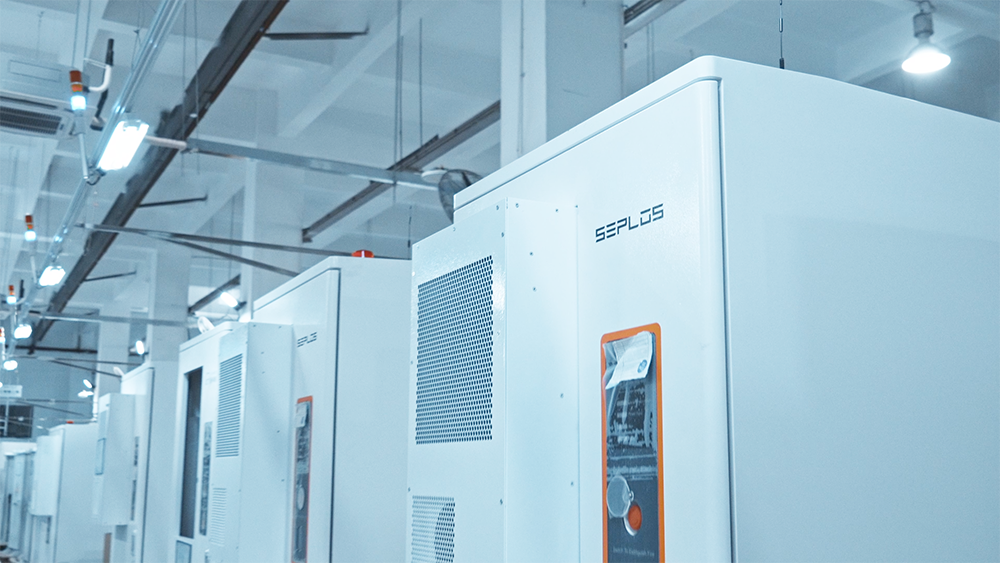
Principle:
Fans drive air across the surface of the battery modules. The moving air removes heat from the batteries through convection — much like a giant cooling fan or air conditioner.
Advantages:
- Simple structure and low initial cost: Air cooling systems are less complex and use standardized components, resulting in lower upfront investment.
- Easy maintenance: No liquid circuits or complex plumbing. Maintenance typically involves cleaning filters and checking fans.
- No leakage risk: Since the medium is air, there’s no danger of coolant leakage damaging the battery.
Disadvantages:
- Low heat dissipation efficiency: Air has a much lower specific heat capacity and thermal conductivity than liquid, making heat transfer slower and less effective.
- Uneven temperature distribution: It’s easy for “hot spots” to form within the battery pack — some cells cool down while others remain hot.
- Higher energy consumption and noise: To maintain cooling performance, fans often operate at high speeds, consuming more power and generating noticeable noise.
- Sensitive to environment: In dusty or high-temperature industrial settings, air cooling becomes less efficient and can accumulate dirt quickly.
2. Liquid Cooling — Using Liquid as the Medium
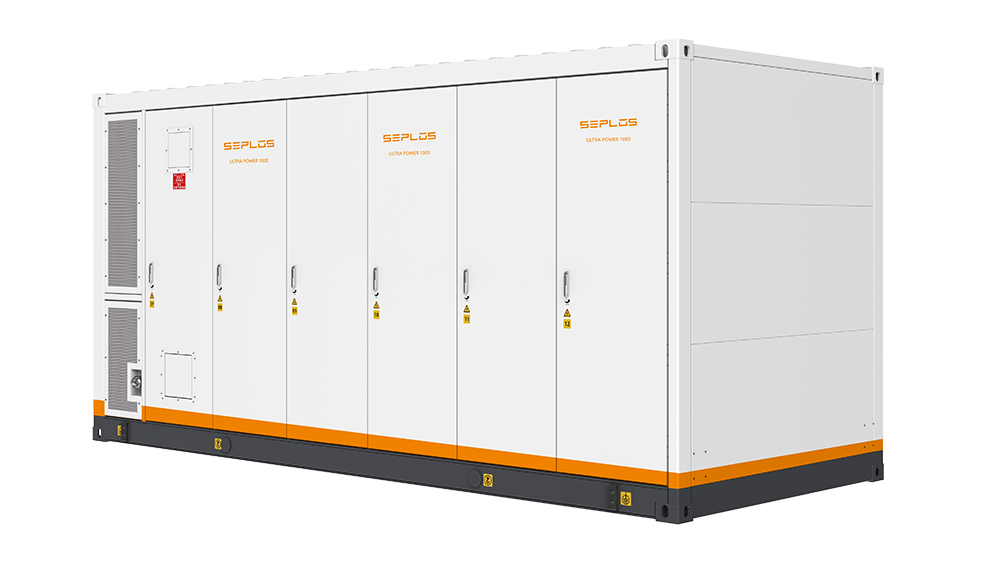
Principle:
Coolant (usually a glycol-water mixture) flows through cooling plates or copper pipes that directly or indirectly contact the battery cells. The coolant absorbs heat and carries it to a liquid cooling unit, which then releases the heat into the environment.
Advantages:
- Superior thermal performance: Liquids have thermal conductivity dozens of times higher than air, enabling rapid and efficient heat removal.
- Excellent temperature uniformity: Liquid cooling maintains a minimal temperature difference among cells (typically within ±3°C), effectively eliminating hot spots.
- Higher energy density: A compact design allows more cells to be packed into limited space, boosting the system’s overall power density.
- Strong environmental adaptability: The closed-loop system prevents dust or humidity interference and operates with low noise levels.
Disadvantages:
- Higher initial investment: Pumps, pipes, and heat exchangers make the structure more complex and costly.
- Specialized maintenance: Requires professional skills to manage and repair; coolant leaks, though rare, can cause severe problems such as short circuits.
- Leakage risk: If not properly sealed, coolant leaks may lead to serious safety issues.
Through these comparisons, it’s clear that liquid cooling vs air cooling BESS systems each have distinct trade-offs — the key lies in balancing performance, safety, and cost for your specific industrial environment.
Round 2: Impact on Energy Storage System Lifespan and Efficiency
The key to system longevity lies in battery health — and temperature is the number one killer of battery life.
In BESS thermal management, how efficiently heat is controlled determines whether the system can operate safely and consistently over many years.
Air-Cooled Systems:
Due to poor temperature uniformity, some cells often operate under higher temperatures or frequent fluctuations. Over time, this accelerates degradation in those cells, creating a “weakest link” effect. The overall lifespan of the pack is then limited by the fastest-aging cell. Moreover, higher temperatures increase the risk of thermal runaway.
Liquid-Cooled Systems:
With precise temperature control and uniform heat distribution, every cell works within the optimal temperature window (typically 20–35°C). This slows degradation, allows higher charge/discharge rates without overheating, and boosts usable capacity and efficiency.
In simple terms, liquid cooling provides fine-tuned BESS thermal management, significantly extending the healthy service life of the energy storage system.
Round 3: Initial Investment vs. Lifecycle Cost (LCOE)
This is often the decisive factor.
To make an informed choice, we must look beyond upfront cost and evaluate BESS total cost of ownership (TCO) and Levelized Cost of Energy (LCOE) — two metrics that truly reveal long-term economic performance.
|
Cost Item |
Air Cooling |
Liquid Cooling |
|
Initial Investment (CAPEX) |
Lower |
Higher (typically 10–20% more) |
|
Operation & Maintenance (OPEX) |
Higher |
Lower |
|
Lifecycle Cost (LCOE) |
Potentially higher |
Usually lower |
Why?
Air cooling consumes more fan power, requires frequent filter replacements (especially in dusty environments), and causes faster battery degradation due to uneven temperature — leading to early cell replacement.
Liquid cooling, though more expensive initially, runs more efficiently with minimal filter maintenance, slower battery aging, and longer overall lifespan.
LCOE Formula:
LCOE=Total CAPEX + Total OPEX/Total Discharged Energy over LifecycleLCOE
For air-cooled systems, low upfront costs are offset by higher O&M expenses and reduced lifetime throughput.
In contrast, the higher investment in liquid cooling is balanced by superior performance, extended lifespan, and lower operational costs — yielding a lower Levelized Cost of Energy (LCOE) and better long-term economics.
Round 4: Choosing the Right BESS Cooling Method for Your Factory
Choose Air Cooling If:
- Your budget is limited and you prioritize low upfront cost.
- The system has low power and moderate cycling requirements (e.g., used mainly for peak shaving with gentle charge/discharge patterns).
- The factory environment is clean and ambient temperatures are moderate.
- Extreme longevity or efficiency is not your primary concern.
Choose Liquid Cooling If:
- Your factory runs high-energy, continuous operations (e.g., steel, chemical, or data centers) that demand superior reliability.
- You need high power output and frequent cycling to maximize ROI.
- The environment is harsh, with high heat or heavy dust.
- You value longer system lifespan, lower total cost, and better long-term returns.
- Space is limited, requiring higher energy density within a compact footprint.
In the the liquid cooling vs air cooling BESS showdown, there is no absolute winner — only the solution that best fits your application.
However, as BESS thermal management technology evolves, liquid cooling is quickly emerging as the preferred solution for demanding industrial environments.
- Air cooling is the “cost-effective contender,” ideal for small-scale or moderate energy storage projects where simplicity and affordability are key.
- Liquid cooling is the “long-term performer,” offering precision thermal control that enhances battery lifespan, safety, and energy efficiency — ultimately delivering a lower BESS total cost of ownership.
For most commercial and industrial users seeking long-term stability, safety, and profitability, liquid cooling is becoming the more forward-looking and economically sound choice.
When planning your factory’s energy storage strategy, don’t be swayed by initial pricing alone. Evaluate from a lifecycle perspective — considering BESS total cost of ownership and LCOE — to select the solution that will safeguard your operations for the next decade and beyond.
Virtual Power Plant (VPP): The Core of Future Energy Management
Backup or Bill Savings? How to Choose the Right Strategy for Your Home Battery System
For more questions, please
contact us

+86 15079804024


Room 102, Building one, No.147, Qingfeng Road, Qingxi Town, Dongguan, China